
Description: When people start shopping for binoculars, they often hear that “bigger lenses are better.” That idea is not completely wrong, but it is also not the whole story. A pair...
When people start shopping for binoculars, they often hear that “bigger lenses are better.” That idea is not completely wrong, but it is also not the whole story. A pair of 10×56 binoculars looks capable on paper because the 56mm objective lenses are large, the 10x magnification is useful for distance, and the package feels like it was built for serious low-light viewing. The real question is whether the numbers translate into a better image when the light is fading, whether the optics stay sharp, and whether the extra weight and magnification become a problem once you are outside at dawn, dusk, or under a thin cloud cover. If you are wondering, Are 10×56 binoculars good for low-light viewing? the short answer is yes, but with some important conditions.
Why 10×56 Binoculars Often Appeal to Low-Light Viewers
The appeal of 10×56 binoculars comes mainly from the objective lens size. A 56mm lens can collect more light than a 42mm or 32mm lens, which matters when the scene is dim. The 10x magnification also helps by making distant subjects look closer without pushing the image into a tiny, washed-out circle. In practical terms, this combination gives you a relatively bright exit pupil, about 5.6mm, which is close to what many adult eyes can use in twilight conditions. That is why many birders, hunters, sailors, and casual astronomers look at 10×56 binoculars as a balanced choice for low-light viewing. They are not as bright as a 7×50 model for people with very large dark-adapted pupils, but they are noticeably brighter than a 10×42 pair and usually much easier to handle than a heavy 20×80 spotting scope.
There is another reason people choose 10×56 binoculars for low-light viewing: they often stay usable when the light is not dramatic. A full moon night, a foggy morning, or a heavily shaded forest edge can all punish small lenses and cheap coatings. If the glass is good, the coatings are efficient, and the eye relief is comfortable, 10×56 binoculars can deliver a clean, bright, contrast-rich image in those awkward lighting moments. The trick is that not every 10×56 model is built the same way. A budget pair with poor transmission may still look dim, while a well-made pair with good phase correction and anti-reflective coatings can make the same low-light scene feel calmer and more detailed.
Question: Are 10×56 binoculars good for low-light viewing because the larger lenses simply let in more light?
Answer: Partly, yes, but the lens size is only one part of the equation. The 56mm objective does gather more light than a smaller lens, and that helps when the sun is low or the sky is overcast. Still, what matters most for low-light viewing is how much of that light reaches your eye and how well the image is corrected. Exit pupil, transmission, lens coatings, glass quality, and contrast all influence whether the view feels bright or muddy. A well-designed 10×56 binocular can be excellent for low-light viewing because it combines a large aperture with a useful magnification and a bright 5.6mm exit pupil. A poor 10×56 binocular, however, may still waste light through weak coatings or uneven optical alignment. So, 10×56 binoculars are often good for low-light viewing, but the quality of the optics matters as much as the size of the lenses.
What Trade-Offs Come With Using 10×56 Binoculars in Dim Conditions
10×56 binoculars can be excellent for low-light viewing, but they are not always the easiest tool to use in those conditions. The 10x magnification makes distant details easier to see, but it also amplifies hand shake. In bright daylight, that is usually manageable. In low light, your eyes may strain more, your hands may feel less steady, and the image can seem to swim if you are standing on a boat, leaning against a tree, or trying to stay still while breathing slowly. This is one reason many people prefer 8×42 binoculars for handheld wildlife viewing: the lower magnification gives a steadier image and a wider field of view, even if the exit pupil is slightly smaller. The 10×56 design asks for more stability, and that can change the experience in low-light viewing.
Weight is another factor. A good 10×56 binocular is often heavier than a compact 8×42 or 10×42 model. That is not a problem if you are sitting in a hunting stand, standing at a fence, or using a tripod for astronomy. It becomes a problem if you are hiking for hours, moving quickly, or trying to keep the binocular steady for a long time. In low-light viewing, fatigue can hurt performance because your eyes and hands have to work harder to keep the image useful. The best 10×56 binoculars are not only bright; they are also comfortable, balanced, and easy to hold for several minutes at a time.
Question: Do 10×56 binoculars work better than 8×42 models for low-light viewing when you are standing, walking, or trying to stay quiet?
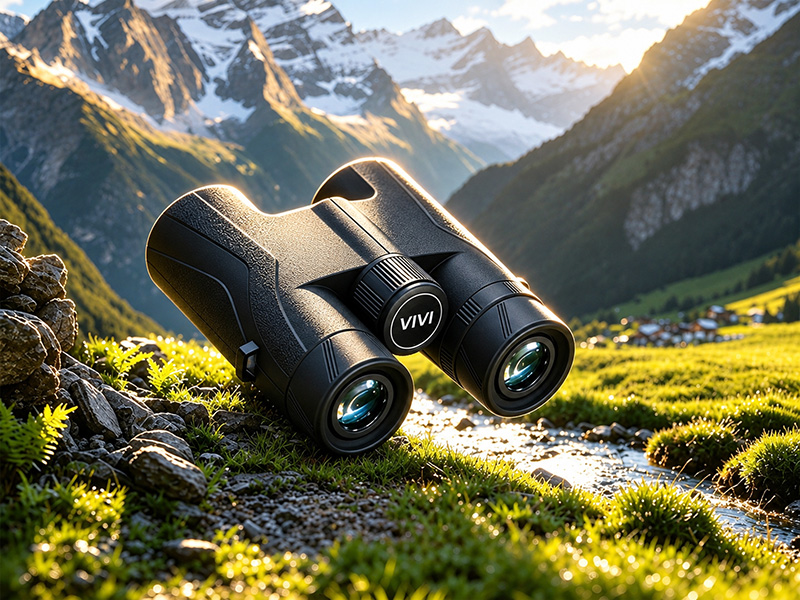
Answer: They can work better in some situations, but not in all of them. If the scene is very dim and the subject is far away, a 10×56 binocular may show more detail than an 8×42 because of its larger objective and higher magnification. The 56mm lens helps with light gathering, and the 10x magnification can reveal distant shapes, movement, or texture that an 8x pair might miss. But if you are moving, walking through brush, or trying to keep a steady view without a rest, the 10x magnification may become a disadvantage. The image can shake more, the field of view is usually narrower, and the heavier body can tire your hands. For many handheld low-light viewing situations, an 8×42 can feel easier and more forgiving. The 10×56 becomes a stronger choice when you can use a steady stance, a rest, a tripod, or when the extra magnification helps you identify something distant in fading light.
So, are 10×56 binoculars good for low-light viewing? Yes, they can be very good, especially when the light is fading but not gone completely. They offer a practical balance between light gathering and magnification, and their 5.6mm exit pupil can be a real advantage in twilight, overcast mornings, shaded forests, or dim harbor scenes. But they are not magic lenses. Their performance depends heavily on optical quality, coatings, eye comfort, and how stable you can be while holding them. If you need a handheld pair for fast-moving birds or long hikes, a smaller 8×42 may feel friendlier. If you are sitting still, watching distant wildlife, scanning a coastline, or observing the sky, a well-made 10×56 binocular can be one of the most satisfying choices for low-light viewing. It is a tool that rewards patience, good optics, and a steady hand.