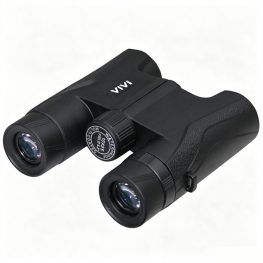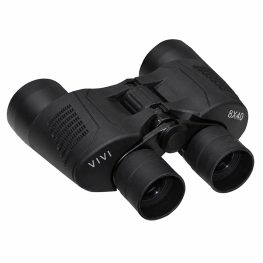


Description: When shopping for binoculars, you will often see numbers such as 8×42, 10×42, or 12×56 printed on the binocular body or product name. But what do these numbers actually mean?...
When shopping for binoculars, you will often see numbers such as 8×42, 10×42, or 12×56 printed on the binocular body or product name. But what do these numbers actually mean?
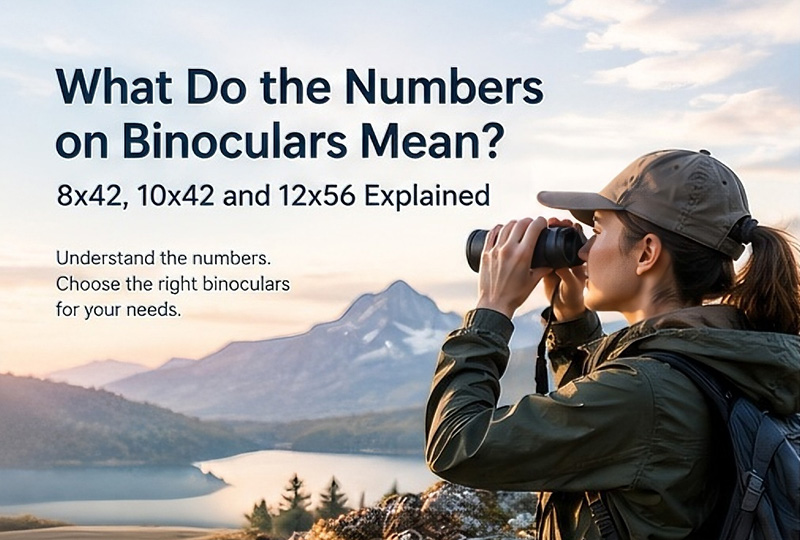
The first number represents magnification, while the second number represents the objective lens diameter in millimeters.
For example, an 8×42 binocular provides 8x magnification and uses 42mm objective lenses. A 10×42 binocular provides 10x magnification with the same 42mm objective lens size, while a 12×56 binocular provides 12x magnification with larger 56mm objective lenses.
Understanding these numbers makes it much easier to choose binoculars for bird watching, wildlife observation, hiking, travel, low-light viewing, and long-range observation.
What Does the First Number on Binoculars Mean?
The first number is the binocular’s magnification power.
For example:
- 8x means the subject appears approximately 8 times closer than it would to the unaided eye.
- 10x means the subject appears approximately 10 times closer.
- 12x means the subject appears approximately 12 times closer.
Higher magnification can make distant subjects appear larger and reveal more detail. However, higher magnification also makes hand movement more noticeable and can make it more difficult to maintain a steady view.
This means higher magnification is not automatically better. The right magnification depends on what you are observing and how you plan to use your binoculars.
8x Binoculars
8x binoculars provide a relatively wide and easy-to-control view.
They are commonly suitable for:
- Bird watching
- Wildlife observation
- Hiking
- Travel
- Outdoor events
- General nature observation
An 8x binocular can be a practical choice when you want a comfortable viewing experience and a wider field of view.
10x Binoculars
10x binoculars provide more magnification than 8x models, making distant subjects appear larger.
They can be useful for:
- Long-distance wildlife observation
- Bird watching
- Outdoor observation
- Sports and events
- Open landscapes
The trade-off is that 10x magnification can be more sensitive to hand movement than 8x magnification.
12x Binoculars
12x binoculars provide even greater magnification and can reveal more detail on distant subjects.
They are particularly useful for:
- Long-range observation
- Wildlife viewing
- Open landscapes
- Astronomy
- Distant subjects
Because the higher magnification makes movement more visible, 12x binoculars may benefit from steadier handling or tripod support, depending on the model and viewing conditions.
What Does the Second Number on Binoculars Mean?
The second number represents the objective lens diameter, measured in millimeters.
For example:
- 8×42 → 42mm objective lenses
- 10×42 → 42mm objective lenses
- 12×56 → 56mm objective lenses
The objective lenses are the larger lenses at the front of the binoculars.
A larger objective lens can collect more light, which can be particularly useful when observing in lower-light conditions. However, larger objective lenses also generally make binoculars larger and heavier.
This creates another important balance between optical performance and portability.
What Does 42mm Mean on Binoculars?
A 42mm objective lens is one of the most common sizes for full-size binoculars.
A 42mm objective lens provides a useful balance between:
- Light-gathering capability
- Size
- Weight
- Portability
- Viewing comfort
This is why 8×42 binoculars and 10×42 binoculars are widely used for outdoor observation and bird watching.
For many users, 42mm binoculars provide enough optical performance without becoming excessively large for hiking and travel.
What Does 56mm Mean on Binoculars?
A 56mm objective lens is larger than a 42mm lens and can collect more light.
For example, 12×56 binoculars combine relatively high magnification with a large objective lens.
This configuration can be useful for:
- Twilight observation
- Wildlife viewing
- Long-range observation
- Astronomy
- Other situations where additional light-gathering capability is useful
The main trade-off is size and weight. A 56mm binocular is generally less compact than a 42mm model.
8×42 vs 10×42 vs 12×56: What’s the Difference?
The three configurations provide different combinations of magnification and objective lens size.
| Binocular Configuration | Magnification | Objective Lens | Typical Strength |
|---|---|---|---|
| 8×42 | 8x | 42mm | Comfortable, wide-view outdoor observation |
| 10×42 | 10x | 42mm | More detail at distance with good portability |
| 12×56 | 12x | 56mm | Higher magnification and stronger low-light capability |
These specifications should be considered together rather than separately.
For example, choosing a 12x binocular simply because it has higher magnification may not be the best approach if you primarily hike long distances and want a lightweight optical system.
Similarly, choosing a smaller binocular may not provide the same low-light performance as a larger-aperture model.
What Is Exit Pupil?
Another useful number that can be calculated from binocular specifications is the exit pupil.
The exit pupil is calculated by dividing the objective lens diameter by the magnification:
Exit Pupil = Objective Lens Diameter ÷ Magnification
For the three examples:
- 8×42 → 42 ÷ 8 = 5.25mm
- 10×42 → 42 ÷ 10 = 4.2mm
- 12×56 → 56 ÷ 12 ≈ 4.67mm
A larger exit pupil can make the binoculars more comfortable to use in lower-light conditions because more light reaches the observer’s eye.
However, exit pupil is only one part of binocular performance. Optical glass, lens coatings, prism design, transmission, focus system, field of view, and overall optical quality also influence the viewing experience.
Which Binocular Magnification Should You Choose?
The best magnification depends on your intended application.
For Bird Watching
8×42 binoculars are a popular configuration for bird watching because they can provide a wide and relatively stable view.
An 8×42 configuration can make it easier to follow moving birds while maintaining a comfortable viewing experience.
For observing birds at greater distances, 10×42 binoculars can provide additional magnification and detail.
For Wildlife Observation
Both 8×42 and 10×42 binoculars can work well for wildlife observation.
Choose based on your typical viewing distance and whether you prioritize a wider field of view or additional magnification.
For more distant subjects and lower-light conditions, larger-aperture configurations such as 12×56 may also be worth considering.
For Hiking and Travel
For hiking and travel, size and weight become more important.
An 8×42 binocular can provide a practical balance between optical performance and portability.
If minimizing size and weight is a major priority, compact binoculars with smaller objective lenses may be more convenient.
For Low-Light Observation
When observation takes place around dawn, dusk, or during other low-light conditions, objective lens size becomes particularly relevant.
A configuration such as 12×56 combines high magnification with a large objective lens, making it suitable for users who prioritize distant viewing and light-gathering capability.
8×42 vs 10×42: What Is the Main Difference?
Because both configurations use 42mm objective lenses, their primary difference is magnification.
8×42 binoculars provide lower magnification and generally make it easier to maintain a stable view.
10×42 binoculars provide greater magnification, which can make distant subjects appear larger and reveal additional detail.
For a more detailed comparison, see our guide to 8×42 vs 10×42 binoculars.
10×42 vs 12×56: What Changes?
Moving from 10×42 to 12×56 increases both magnification and objective lens diameter.
This can provide a different viewing experience:
- Higher magnification
- Larger objective lenses
- Greater light-gathering potential
- More demanding handling
- Generally larger size and weight
A 12×56 configuration can therefore be attractive for long-range and lower-light observation, while a 10×42 configuration may be more practical for general outdoor use.
Do Bigger Binocular Numbers Always Mean Better Binoculars?
No.
There is no single binocular specification that is best for every application.
Higher magnification can provide more detail, but it can also make image movement more noticeable.
Larger objective lenses can collect more light, but they can also increase the size and weight of the binoculars.
The best configuration is therefore the one that matches your viewing distance, lighting conditions, application, and portability requirements.
Quick Guide to Binocular Numbers
If you are comparing binoculars, this simple guide can help:
8×42: A balanced configuration for bird watching, wildlife, hiking, travel, and general outdoor observation.
10×42: More magnification while retaining a relatively manageable 42mm objective lens, suitable for distant wildlife and outdoor viewing.
12×56: Higher magnification combined with a larger objective lens, useful for long-range and lower-light observation.
Final Thoughts
The numbers printed on binoculars tell you two of the most important things about their optical configuration.
The first number is magnification, while the second number is objective lens diameter in millimeters.
An 8×42 binocular offers 8x magnification and 42mm objective lenses. A 10×42 binocular increases magnification to 10x while keeping the same 42mm objective lens size. A 12×56 binocular combines 12x magnification with larger 56mm objective lenses.
Understanding these differences can help you choose binoculars based on how, where, and when you plan to use them rather than simply choosing the largest numbers.
For more guidance, explore our VIVI Optics binoculars, binocular buying guides, and frequently asked questions to compare different configurations and applications.